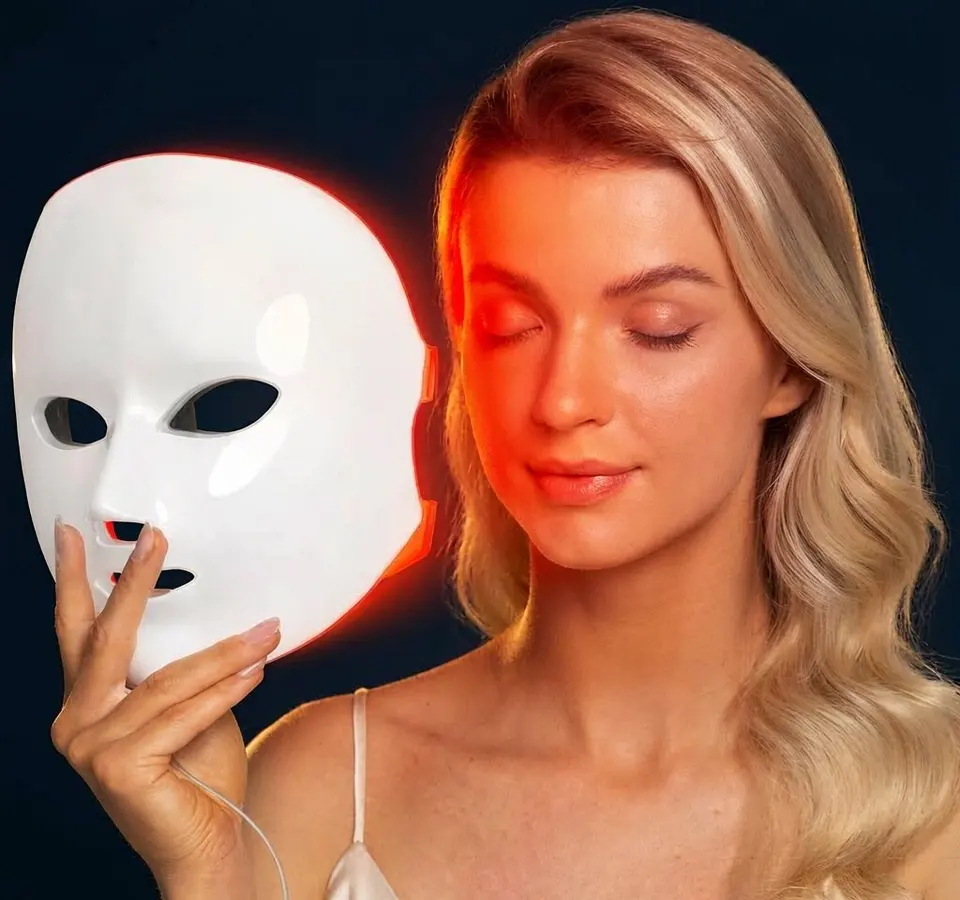
LED Masks for Acne: What 465nm Blue Light Actually Does to a Breakout
Blue light acne therapy sounds like wellness-industry magic until you meet the actual mechanism: a photosensitizer made by the bacteria themselves. Here's the science, the evidence quality, and why the device you pick needs an FDA-cleared acne indication — not just blue LEDs.
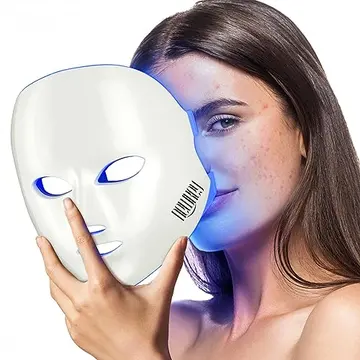
Most skincare marketing asks you to believe in a substance. Blue light therapy is the rare pitch where the mechanism is weird enough to be true: the bacteria that cause inflammatory acne manufacture their own weakness, and 465nm blue light is the wavelength that trips it. This article is the science, the evidence quality, and the buying checklist — including the regulatory detail that matters more than any before-and-after photo.
The mechanism: the bacteria build their own trap
Cutibacterium acnes — the bacterium behind inflammatory acne — produces porphyrins as part of its normal metabolism. Porphyrins absorb light strongly in the blue-violet band, roughly 405–470nm, with peak absorption near 415nm. When they absorb it, a photodynamic reaction fires: reactive oxygen species are generated inside the bacterial cell, and the bacterium that made the porphyrin is the one destroyed by it. In plain terms: the bug photosensitizes itself. Topical light, no drug, no resistance developing the way it does against antibiotics — because the target is chemistry, not a protein you can mutate around.
Blue light on its own does something else worth knowing: at proper doses it calms the visible inflammation in active lesions by effects on sebaceous gland activity and immune signaling. That's why results aren't limited to sterilizing the skin.
The evidence, graded honestly
Where blue light stands in the literature:
- Mild-to-moderate inflammatory acne: the strongest case. Multiple randomized and controlled studies show meaningful lesion-count reductions over 4–12 weeks of repeated blue-light exposure, typically in the 415–470nm band. The effect is real, moderate, and cumulative — not a one-night transformation.
- Blue + red combination: several trials found the combination outperforms blue alone — red at 650nm adds anti-inflammatory and healing support while blue handles the bacterial driver. This is why dual-wavelength masks exist, and why our red vs. blue explainer refuses to pick a single winner for mixed concerns.
- Severe nodulocystic acne: not the tool. Deep nodules sit beyond light penetration, and severe disease needs dermatologist-led care. Light therapy is a mild-to-moderate play, full stop.
The regulatory detail that separates devices
Here is the sentence that should organize your whole purchase: blue LEDs are a component; a cleared indication is a claim. Any company can put 465nm LEDs in a mask. What very few masks hold is FDA 510(k) clearance for an acne indication — a regulatory finding that the device is substantially equivalent to a legally marketed acne treatment device, with the labeling to prove it. The premium masks in this category largely don't carry it; we noted in our Omnilux comparison that its own labeling instructs users it isn't for acne. The NEWKEY Blue Light Therapy Mask ($189.99) and our flagship 4D mask ($169.99) hold cleared acne indications — which is precisely why that clearance, not the price, is the reason to buy them.
What a realistic protocol looks like
The studies that worked used near-daily exposure for weeks. Translated into home use: 10 minutes a day, cleansed dry skin, opaque eye protection, for a minimum of 8–12 weeks before judging — the same consistency curve red light follows, charted in our results timeline. Expect fewer and shallower inflammatory lesions first, then slower improvement in overall breakouts. Pair it with your existing topicals unless they're photosensitizing; retinol and light therapy stack fine with simple scheduling.
The bottom line
Blue light therapy for acne is one of the few gadget categories where the mechanism, the evidence, and the regulatory pathway all point the same direction — if you buy a device cleared for the indication, use it near-daily for a full 12 weeks, and keep expectations calibrated to mild-to-moderate disease. The science is genuinely on your side here. The marketing is the part that needs adult supervision.
Ready to Transform Your Skin?
Explore our LED devices — the 4D mask is FDA-cleared — and start your clinical skincare journey today.
Shop Collection