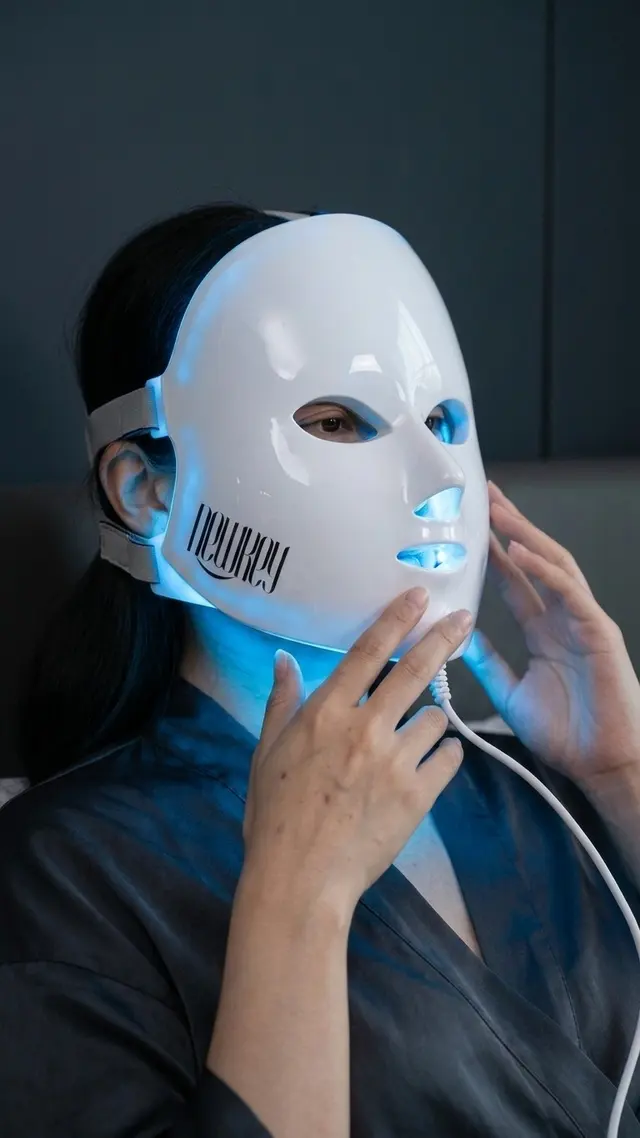
Red Light Therapy and Sensitive Skin: Who Should Use It, Who Should Wait
Sensitive skin and LED masks: what red light actually does to reactive skin, how to patch test, when to start slow — and when to talk to a dermatologist first.
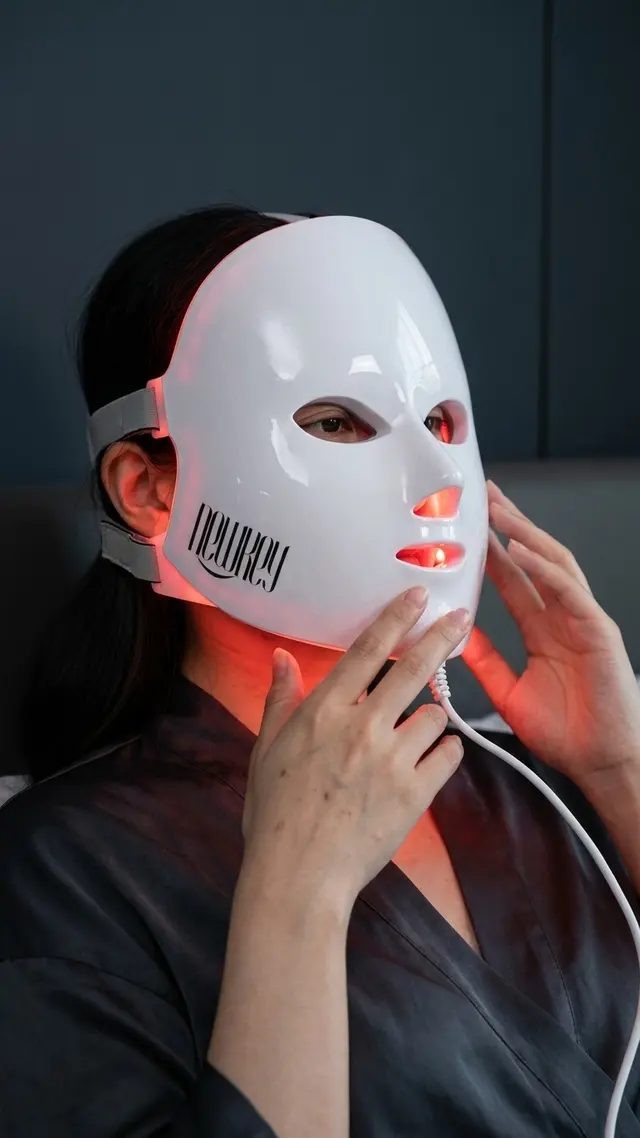
If your skin flares up at the mention of fragrance, stings with most cleansers, and has a three-step truce going with your moisturizer, an LED mask can look like the last thing you'd voluntarily put on your face.
So the fair question is: can reactive, easily irritated skin actually tolerate red light therapy — or is this a device category built for someone else's face?
What red light actually is — and isn't
Red light is not an ingredient, an acid, or an exfoliant. Nothing is being applied to your skin, and nothing is being removed from it. Devices in this category — including the ones cleared by the FDA for at-home use — work in the 620–660nm range in studies, delivering light that is absorbed by mitochondria and associated with the skin's own repair signalling.
Two things follow from that, and both matter for sensitive skin:
- There is no contact allergen. Reactions to skincare products are usually reactions to formulas — preservatives, fragrance, actives. Light has none of those.
- It does not thin or strip the barrier. Unlike exfoliating acids or retinoids, red light is not associated with barrier disruption. If anything, the research literature around photobiomodulation describes it as supportive rather than aggressive.
The honest part: "non-irritating" is not the same as "nothing to think about"
Three real considerations remain:
- Heat and intensity vary between devices. Cheap masks with unregulated output can run warm, and warmth alone can flush reactive skin. This is a device-quality question, not a red-light question — it's part of what clearance and calibrated output exist to solve.
- Photosensitizing medications change the math. If you take a medication with photosensitivity warnings — certain antibiotics like tetracyclines, some acne treatments, some herbal supplements — check with your doctor or pharmacist before any light-based device. That guidance applies to LED masks too, and it's in the manual for a reason.
- Conditions like rosacea, eczema and psoriasis are their own conversation. They're not automatic disqualifiers, and some people report their skin calmer with regular use — but "some people on the internet" is not medical advice. A dermatologist who knows your specific flare pattern should make that call with you.
How to start if your skin is reactive
The routine below is deliberately boring. Boring is the point.
- Week 0 — patch test. Use the mask once on a short session (5 minutes or less) over a small area — the jawline or cheekbones rather than the whole face. Then wait 24–48 hours. Redness that fades within an hour is a normal, transient response. Stinging, itching or bumps that last into the next day are your answer for now.
- Weeks 1–2 — shorten and space out. If the patch test was uneventful, run short sessions every third day rather than every day. Reactive skin tends to tolerate gradual introduction far better than enthusiasm.
- Week 3 onward — settle into the standard routine. If two weeks went fine, move to the normal cadence. For a cleared device like the NEWKEY 4D mask, that's 10 minutes per session, three times a week, on bare clean skin.
One rule that protects sensitive skin more than any of the above
Do not stack your mask session with your actives session in the same sitting. If you use exfoliating acids, benzoyl peroxide or a strong retinoid, keep them in a different part of your routine than your light sessions — not because light plus acid is dangerous, but because reactive skin's irritation budget is finite, and spending all of it at once makes it impossible to tell what's actually causing what.
We've covered the retinol version of this question separately. The principle is the same: introduce one variable at a time.
The bottom line
Sensitive skin is not a contraindication for red light therapy on a properly cleared device — there's no allergen, no stripping, no UV. What it does require is the boring version of diligence: a patch test, a slow start, honest attention to how your skin responds, and a dermatologist's input if you're managing rosacea, eczema or photosensitizing medication.
If your skin has taught you to distrust anything that promises transformation, that instinct is healthy. Calibrated light on cleared devices asks less of your skin than most serums do — it just asks it consistently.
Ready to Transform Your Skin?
Explore our LED devices — the 4D mask is FDA-cleared — and start your clinical skincare journey today.
Shop Collection